How to reconstitute L-Glutathione
L-Glutathione comes as a freeze-dried powder in much bigger vials than most peptides, often 600 mg, and it is measured in mg. This chart mixes the 600 mg vial the way the Reconstitution Encyclopedia does, with 1 mL of bacteriostatic water, so each unit on the syringe holds 6 mg and 50 units is 300 mg. The Encyclopedia also charts the 500 mg and 1,500 mg vials. The calculator takes any other vial or amount of water.
- 600 mg vial: add 1 mL of bacteriostatic water. That makes 600 mg/mL, so each unit on a U-100 insulin syringe holds 6 mg, and 200 mg is 33.3 units.
Get this chart as a printable PDF
The amounts are examples for the arithmetic, not recommendations. For research and education only.

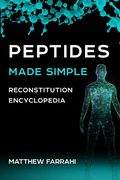
This chart is from Matthew’s Reconstitution Encyclopedia. The steps are the same for every peptide: watch one mixed on Reconstitution Insights.
L-Glutathione units chart
What each amount comes to on a 1 mL (U-100) insulin syringe, with the water from the book’s chart. Using a different amount of water? The calculator works it out.
600 mg vial + 1 mL bacteriostatic water
600 mg/mL concentration6 mg in each unit
| Amount | Units (U-100) | Volume |
|---|---|---|
| 50 mg | 8.3 units | 0.083 mL |
| 100 mg | 16.7 units | 0.167 mL |
| 150 mg | 25 units | 0.25 mL |
| 200 mg | 33.3 units | 0.333 mL |
| 250 mg | 41.7 units | 0.417 mL |
| 300 mg | 50 units | 0.5 mL |
| 350 mg | 58.3 units | 0.583 mL |
| 400 mg | 66.7 units | 0.667 mL |
| 450 mg | 75 units | 0.75 mL |
| 500 mg | 83.3 units | 0.833 mL |
| 550 mg | 91.7 units | 0.917 mL |
| 600 mg | 100 units | 1 mL |

This chart is 1 of 168 in the Reconstitution Encyclopedia: 67 peptides and blends at every common vial size. All three books as ebooks, straight from Matthew.
Step by step
Every step, in writing. They're the same for any peptide.
- Check the label.
The vial says how much powder is in it: 600 mg.
- Draw the water.
Use bacteriostatic water: 1 mL for the 600 mg vial. If it's more than 1 mL, a 3 mL syringe does it in one draw.
- Add it slowly.
Let the water run down the inside wall of the vial, then swirl gently until the powder has dissolved. Don't shake it.
- Write the strength on the vial.
For the 600 mg vial that's 600 mg/mL, or 6 mg per unit, plus the date you mixed it.
- Find your amount.
Read the units from the chart, or put your own numbers in the calculator. Then check it backwards: units × mg per unit should give the amount you wanted.
Free printable PDF
Get the L-Glutathione chart as a printable page.
Every vial size on one sheet, to keep next to the vials. Free, by email.
Questions about mixing this one? Ask in Peptide Academy, free to join.
This chart is one of 168 in the Reconstitution Encyclopedia: 67 peptides and blends, every common vial size, mixed step by step.
Questions
How much bacteriostatic water do you add to a 600 mg L-Glutathione vial?
The Reconstitution Encyclopedia's chart adds 1 mL. That makes 600 mg/mL, so each unit on a U-100 insulin syringe holds 6 mg. You can use more or less water: the amount of peptide in the vial stays the same, only what each unit holds changes. The calculator works it out for any amount.
How many units do I draw for an amount of L-Glutathione?
Divide the amount you want (in mg) by what one unit holds. For example, 200 mg from the 600 mg vial mixed with 1 mL is 33.3 units (0.333 mL). The chart above lists the other amounts.
What is a unit on an insulin syringe?
U-100 insulin syringes are marked in units: 100 units is 1 mL, so 1 unit is 0.01 mL whatever the size of the syringe. A 0.3 mL syringe holds 30 units and a 0.5 mL syringe holds 50.
Is this dosing advice?
No. The amounts are examples for the arithmetic, not recommendations. This page is for research and education only and isn't medical advice.


Free book
Before you go: the Pocket Guide, free.
4.8 from 166 Amazon ratings
Find any peptide in 10 seconds. The whole book as a free PDF.