How to reconstitute Kisspeptin-10
Kisspeptin-10 most often comes as a freeze-dried powder in a 5 mg vial. This chart mixes it the way the Reconstitution Encyclopedia does, with 3 mL of bacteriostatic water, so every 6 units on the syringe holds 100 mcg. The Encyclopedia also charts the 2 mg and 10 mg vials. The calculator takes any other vial or amount of water.
- 5 mg vial: add 3 mL of bacteriostatic water. That makes 1.67 mg/mL, so each unit on a U-100 insulin syringe holds 16.7 mcg, and 100 mcg is 6 units.
Get this chart as a printable PDF
The amounts are examples for the arithmetic, not recommendations. For research and education only.
Kisspeptin-10 units chart
What each amount comes to on a 1 mL (U-100) insulin syringe, with the water used in the video. Using a different amount of water? The calculator works it out.
5 mg vial + 3 mL bacteriostatic water
1.67 mg/mL concentration16.7 mcg in each unit
| Amount | Units (U-100) | Volume |
|---|---|---|
| 50 mcg | 3 units | 0.03 mL |
| 100 mcg | 6 units | 0.06 mL |
| 150 mcg | 9 units | 0.09 mL |
| 200 mcg | 12 units | 0.12 mL |
| 250 mcg | 15 units | 0.15 mL |
| 300 mcg | 18 units | 0.18 mL |
| 400 mcg | 24 units | 0.24 mL |
| 500 mcg | 30 units | 0.3 mL |

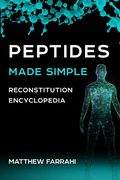
This chart is 1 of 168 in the Reconstitution Encyclopedia: 67 peptides and blends at every common vial size. All three books as ebooks, straight from Matthew.
Step by step
The same steps as the video, in writing.
- Check the label.
The vial says how much powder is in it: 5 mg.
- Draw the water.
Use bacteriostatic water: 3 mL for the 5 mg vial. If it's more than 1 mL, a 3 mL syringe does it in one draw.
- Add it slowly.
Let the water run down the inside wall of the vial, then swirl gently until the powder has dissolved. Don't shake it.
- Write the strength on the vial.
For the 5 mg vial that's 1.67 mg/mL, or 16.7 mcg per unit, plus the date you mixed it.
- Find your amount.
Read the units from the chart, or put your own numbers in the calculator. Then check it backwards: units × mcg per unit should give the amount you wanted.
On Peptide Insights
The Kisspeptin-10 overview
For what Kisspeptin-10 is and what research has looked at, here is Matthew's full video on Peptide Insights, his main channel. 11:00 long.
Read the Kisspeptin-10 profileKisspeptin-10 dosageWatch on YouTube ↗
Free printable PDF
Get the Kisspeptin-10 chart as a printable page.
Every vial size on one sheet, to keep next to the vials. Free, by email.
Questions about mixing this one? Ask in Peptide Academy, free to join.

This chart is one of 168 in the Reconstitution Encyclopedia: 67 peptides and blends, every common vial size, mixed step by step.
Questions
How much bacteriostatic water do you add to a 5 mg Kisspeptin-10 vial?
In the Reconstitution Insights video, Matthew adds 3 mL. That makes 1.67 mg/mL, so each unit on a U-100 insulin syringe holds 16.7 mcg. You can use more or less water: the amount of peptide in the vial stays the same, only what each unit holds changes. The calculator works it out for any amount.
How many units do I draw for an amount of Kisspeptin-10?
Divide the amount you want (in mcg) by what one unit holds. For example, 100 mcg from the 5 mg vial mixed with 3 mL is 6 units (0.06 mL). The chart above lists the other amounts.
What is a unit on an insulin syringe?
U-100 insulin syringes are marked in units: 100 units is 1 mL, so 1 unit is 0.01 mL whatever the size of the syringe. A 0.3 mL syringe holds 30 units and a 0.5 mL syringe holds 50.
Is this dosing advice?
No. The amounts are examples for the arithmetic, not recommendations. This page is for research and education only and isn't medical advice.


Free book
Before you go: the Pocket Guide, free.
4.8 from 166 Amazon ratings
Find any peptide in 10 seconds. The whole book as a free PDF.