The peptides in this stack
What is Thymosin Alpha-1 + LL-37?
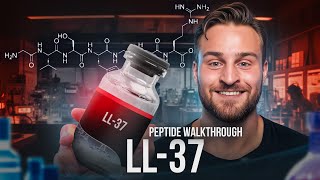
Thymosin alpha-1 is a small peptide first isolated from the thymus, the gland where T cells mature. LL-37 is a peptide the human body makes as part of its first line of defense against microbes.
These are separate compounds that are discussed together as a combination, not a single approved product. Each was developed and studied on its own. Online they are often grouped into a goal-based stack; that grouping is a practical idea, not a tested formula.
How does Thymosin Alpha-1 + LL-37 work?
Each part of Thymosin Alpha-1 + LL-37 has its own research and appears to act through its own route. Thymosin alpha-1 has mostly been studied for hepatitis b and c, vaccine response, sepsis, cancer care. LL-37 has mostly been studied for infections, biofilms, chronic wounds, immune signaling. Because these routes differ, the thinking is that using them together could add up. That is a hypothesis: no published study has looked at these compounds given together.
What has research looked at?
- Thymosin alpha-1
- Studied for hepatitis b and c, vaccine response, sepsis, cancer care. See the Thymosin alpha-1 profile for detail.
- LL-37
- Studied for infections, biofilms, chronic wounds, immune signaling. See the LL-37 profile for detail.
- The combination
- There are no published animal or human studies of these compounds used together.
So the case for this combination rests on separate sets of research, most of it in animals or early human work. That is a reason to treat claims about the pairing with care, not a sign the combination has been tested.
Why Thymosin alpha-1 and the others are combined
Thymosin alpha-1 is studied for how it signals the immune system, and LL-37 is the body's own antimicrobial peptide. The pair is discussed around immune-system research.
Thymosin Alpha-1 + LL-37 dosage
In research protocols, Thymosin Alpha-1 + LL-37 is typically discussed at 1 mg of thymosin alpha-1 and 100 mcg of LL-37, once daily, used for cycles of 30 days on and 30 days off.
| For | Amount | How often | Cycle | Timing | Source |
|---|---|---|---|---|---|
| Thymosin alpha-1 | 1 mg | once daily | 30 days on and 30 days off | Not stated | Common research protocol |
| LL-37 | 100 mcg | once daily | 30 days on and 30 days off | Not stated | Common research protocol |
Research protocols for education, not medical advice.
Cautions: None of these compounds has large human safety studies, and the combination has none. More under side effects and cautions.
This combination has not been tested together in clinical trials; the amounts shown are those used for each part on its own, taken from how researchers and the book describe them.
Side effects and cautions
None of the parts has large human safety studies, and the combination has none. Effects people describe online, such as irritation where it was given, headache or tiredness, come from anecdote rather than trials. Anyone with health questions should speak with a qualified clinician.
- Autoimmune conditions
- Compounds that act on the immune system carry a theoretical concern for anyone with an autoimmune condition.
- Unknown interactions
- Combining compounds can change their effects in ways that single-compound studies do not show.
- Product quality
- Blends and research compounds may not match their labels in amount or purity.
- Pregnancy and breastfeeding
- There are no safety data for these compounds in pregnancy or breastfeeding.
The research on each part
- Thymosin alpha-1: Many human studies over decades, with mixed results by condition; the largest recent one, a 1,106-person placebo-controlled sepsis trial published in 2025, found no survival benefit; latest study 2025
This is the checked research on each part on its own, not on Thymosin Alpha-1 + LL-37 as a combination.
Further reading
This page summarizes the research in plain words. To read the studies yourself:
- Published studies on Thymosin alpha-1 PubMed, US National Library of Medicine
- Published studies on LL-37 PubMed, US National Library of Medicine