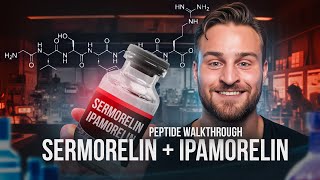
What is sermorelin?
Natural human GHRH is a 44-amino-acid peptide made in the hypothalamus. Soon after it was identified in the early 1980s, researchers found that its first 29 amino acids carry its full ability to trigger growth hormone release. Sermorelin is that 29-amino-acid fragment, made synthetically. Enzymes break it down quickly, so it stays active in the bloodstream for only minutes.
Starting in the 1990s, sermorelin was sold as Geref, used both to test how well the pituitary releases growth hormone and to treat children with idiopathic growth hormone deficiency. The branded product was later discontinued. Newer GHRH analogs, including tesamorelin and modified versions of the same 1-29 sequence, were designed to last longer in the body.
How does sermorelin work?
Sermorelin binds to GHRH receptors on the growth hormone-making cells of the pituitary gland, prompting them to make and release growth hormone, which in turn raises IGF-1 from the liver. Because it works through the body's own system, the usual brakes still apply. Somatostatin can blunt the response and rising IGF-1 slows release, which is why GHRH analogs are described as keeping the natural pulsing pattern.
This is also a limit. Sermorelin only works if the pituitary can respond, and its effect is capped by the same feedback that controls natural release. That is why it is often discussed alongside ghrelin-type peptides such as ipamorelin, which act on a separate receptor. The Sermorelin + Ipamorelin page covers that pairing.
Sermorelin vs HGH
HGH is the growth hormone molecule itself, while sermorelin is a signal that asks the pituitary to release more of its own. With HGH, blood levels depend on what is given and bypass the body's feedback. With sermorelin, the pituitary and its feedback stay in charge, so the effect is smaller and depends on a working pituitary. HGH also has far more human research behind it, including long-term data.
What has research looked at?
Sermorelin has a real clinical history, but most adult research is decades old and small. Those studies mostly measured hormone levels rather than outcomes people care about, such as strength, body fat or long-term health, so its effects in healthy adults remain uncertain.
- Growth in children
- In children with idiopathic growth hormone deficiency, clinical studies found that sermorelin increased growth rate, which supported its approval. Responses varied, and HGH remained the more widely used treatment.
- Testing pituitary function
- Because it triggers growth hormone release, sermorelin and other forms of GHRH have been used to test how well the pituitary responds.
- Older adults
- Small studies in the 1990s found that sermorelin raised growth hormone and IGF-1 in older adults, with some reporting modest changes in lean mass or well-being, mostly in men.
- Sleep
- Some studies of GHRH reported more deep, slow-wave sleep in young men. Findings in older adults were weaker and less consistent.
- Muscle, fat and recovery
- These are common reasons people discuss sermorelin, but no large modern trials have tested these outcomes in healthy adults.
Side effects and cautions
In clinical use, the most commonly reported side effects were reactions at the injection site, facial flushing and headache. Because sermorelin raises growth hormone and IGF-1, the broader cautions of the growth hormone axis also apply, though the body's feedback tends to limit how high levels go. Long-term safety in healthy adults has not been studied. Talk to a qualified clinician before making decisions about any growth hormone-related compound.
- Injection-site reactions
- Pain, redness, itching or swelling at the injection site were the most frequent effects reported.
- Flushing and headache
- Brief warmth or flushing of the face and headache have been reported.
- Fluid and joints
- As with other compounds that raise growth hormone, water retention and joint aches are possible.
- Blood sugar
- Higher growth hormone can reduce insulin sensitivity, which matters for people with or at risk of diabetes.
- Cancer history
- Because IGF-1 promotes cell growth, compounds that raise it are generally avoided in people with active cancer, and any past history of cancer calls for careful review.
Further reading
This page summarizes the research in plain words. To read the studies yourself:
- Published studies on Sermorelin PubMed, US National Library of Medicine