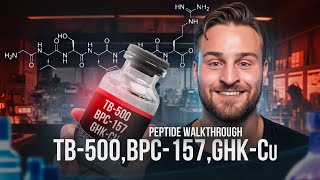
What is GHK-Cu?
GHK is short for glycyl-histidyl-lysine, a chain of just three amino acids. It was identified in human plasma in the early 1970s by researcher Loren Pickart, who reported that it changed how liver tissue behaved in lab experiments. GHK binds copper very tightly, and the copper-bound form is called GHK-Cu.
Pickart's research reported that GHK levels in blood are lower in older adults than in young adults, which is one reason it is discussed in anti-aging circles. GHK-Cu is a common ingredient in serums and creams, where it appears on labels as copper tripeptide-1. It is not an approved medicine, and most products that contain it are sold as cosmetics.
How does GHK-Cu work?
Researchers think GHK-Cu works in a few ways. It can carry copper into cells, and copper is needed by enzymes that build and cross-link collagen and elastin. In cell studies, GHK-Cu increased collagen and glycosaminoglycan production by skin fibroblasts and affected enzymes that break down and remodel the tissue around cells. It also appears to attract immune and repair cells toward injured areas.
Computer analyses of public gene expression databases reported that GHK can shift the activity of a large number of human genes, including some tied to tissue repair and antioxidant defense. This is often repeated online as GHK-Cu resetting hundreds or thousands of genes. These were lab and data-mining findings, and they do not show what happens in a person's skin or body.
Mixing it for research?
GHK-Cu reconstitution chart: how much bacteriostatic water to add to a 5 mg, 10 mg, 50 mg or 100 mg vial and how many units each amount is, with Matthew’s step-by-step video.
See the mixing chartWhat has research looked at?
- Skin aging
- Small human studies of creams containing GHK-Cu reported improvements in measures such as fine lines, skin density and firmness over several weeks. Most had few participants and limited independent replication.
- Wound healing
- In studies in several animal species, researchers reported faster wound closure and more blood vessel growth with GHK-Cu. Large human wound trials have not established it as a treatment.
- Hair
- Lab and animal work suggested copper peptides may affect hair follicle size and growth. Good-quality human trials for hair loss are lacking.
- Lung tissue
- A lab study using lung cells from people with emphysema reported that GHK shifted gene activity toward a healthier pattern and restored some of the cells' ability to remodel collagen in a dish. This has not been tested as a treatment in people.
- Bone and nerves
- A few animal studies have explored bone repair and nerve regrowth. These are early and limited findings.
The strongest human data for GHK-Cu are small cosmetic studies applied to the skin. Claims about injected GHK-Cu, or about effects throughout the body, rest mostly on lab and animal work. Many of the skin studies were short and small and have not been independently repeated, so larger trials would be needed to confirm the results.
Side effects and cautions
Applied to the skin in cosmetic amounts, GHK-Cu is generally considered low risk, though some people report redness, itching or irritation. Injected GHK-Cu has not been studied in proper human safety trials. People commonly report stinging or burning where it was injected, but these reports are anecdotal. Anyone with health questions should talk to a qualified clinician.
- Copper load
- Too much copper can be harmful, especially for people with conditions that affect copper handling, such as Wilson disease. Copper exposure from injected GHK-Cu has not been well studied.
- Skin reactions
- Copper peptides can cause irritation or allergic reactions in some people, as with many active skin ingredients.
- Cancer history
- GHK-Cu has been linked to blood vessel growth in animal studies, a theoretical concern for people with current or past cancer.
- Pregnancy and breastfeeding
- There are no safety data for injected use.
Further reading
This page summarizes the research in plain words. To read the studies yourself:
- Published studies on GHK-Cu PubMed, US National Library of Medicine
- GHK-Cu reconstitution chart water and units for each vial size